
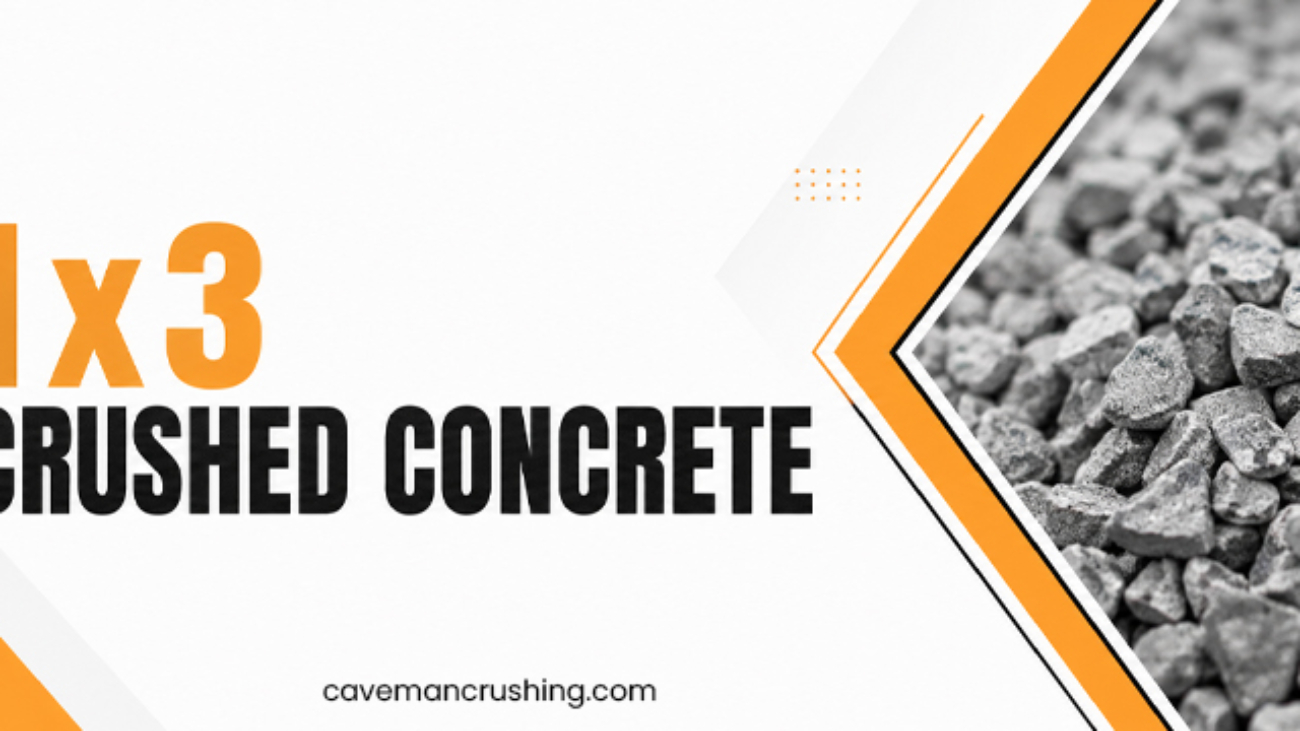
Choosing construction materials is not always as simple as picking the lowest-priced option. The material needs to suit the job, perform well on site, and arrive when the crew is ready for it. That is where recycled aggregates can make a real difference. 1×3 crushed concrete is a practical choice for several construction, drainage, landscaping, and erosion-control applications.
When material selection and hauling are planned together, contractors can also avoid unnecessary transportation costs, delays, and site congestion.

What Is 1×3 Crushed Concrete?
1×3 crushed concrete is recycled concrete that has been processed into larger aggregate pieces. The name refers to the approximate size range of the material. Unlike finer crushed concrete, it leaves more space between individual pieces.
That characteristic makes it useful in situations where water needs room to move through the material or where a larger aggregate is preferred for fill and stabilization work.
The material is produced from recovered concrete rather than being sourced entirely from newly quarried stone. As a result, it can provide a useful option for projects where recycled construction materials are preferred.
How Is It Different From Smaller Aggregates?
Aggregate size has a direct effect on how material behaves after placement.
Fine aggregate can create a tighter, denser layer when properly compacted. Larger pieces, on the other hand, provide more open space between particles. This makes them useful for certain drainage, fill, and erosion-control applications.
However, larger does not automatically mean better. The correct material depends on the specifications of the project, soil conditions, drainage requirements, expected loads, and the surface that will eventually be placed above it.
Key Benefits of 1×3 Crushed Concrete
1. A Practical Way to Manage Material Costs
One reason contractors consider recycled concrete is its potential cost advantage over some virgin aggregates. The actual savings will depend on local material prices, order volume, transportation distance, and installation requirements.
Delivery deserves particular attention. A cheaper aggregate can lose its price advantage if it has to travel a long distance to reach the job site.
For that reason, contractors should compare the delivered cost, not just the price per load or ton.
2. Useful for Drainage Applications
Water can move through the open spaces between larger aggregate pieces. Because of this, the material can be considered for drainage layers and other applications where water movement is important.
It may also be useful around selected structures or low-lying areas where proper drainage planning is required.
Still, aggregate alone does not solve every water problem. Site grading, drainage pipes, soil conditions, and other components need to be considered as part of the overall design.
3. Gives Recovered Concrete Another Purpose
Construction and demolition work can produce substantial amounts of broken concrete. Recycling gives that material another useful role instead of treating it solely as waste.
Processed concrete can return to the construction cycle as aggregate for another project. This reduces the need to dispose of usable material and can help contractors meet sustainability objectives.
4. Suitable for Several Types of Projects
Another advantage is its range of potential applications. Depending on the project specifications, larger recycled concrete can be used for drainage work, erosion control, landscaping, road-related projects, and certain fill applications.
Before ordering, however, check the required aggregate size and grading. A material that works well for drainage may not be the right choice for the final surface of a driveway or parking area.
When Should You Consider 1×3 Crushed Concrete?
The best time to consider 1×3 crushed concrete is when the project calls for a larger recycled aggregate rather than a finely graded material.
For example, drainage work can benefit from the open structure of larger pieces. Sloped areas may require stable aggregate to help control soil movement. It can also be considered for certain landscaping projects where a durable base or decorative stone is required.
Commercial and civil construction projects may have additional applications, including road work, industrial areas, drainage structures, and larger fill operations.
Questions to Ask Before Ordering
Start with the purpose of the material.
Will it be used for drainage? Is it supporting another layer? Does the area experience water runoff? Will heavy vehicles travel over it?
These questions help determine whether the material is appropriate. It is also wise to confirm grading, quantity, delivery requirements, and site access before placing an order.
Why Trucking Matters as Much as the Aggregate
Finding suitable material is only part of the job. It also has to reach the site efficiently.
Transportation can influence the overall project budget more than many contractors initially expect. Fuel, distance, truck availability, loading time, unloading conditions, and scheduling all affect the final cost.
Reliable recycling trucking services can help move recycled aggregates between processing facilities, suppliers, and construction sites. They can also be useful when a project needs both incoming material and outgoing construction debris.
Schedule Deliveries Around Your Crew
A truck arriving at the wrong time can create problems.
If material arrives before the site is ready, it may have to be stockpiled in an inconvenient location. If it arrives late, equipment and workers may be left waiting.
A better approach is to coordinate deliveries with the actual work schedule. Consider truck access, unloading space, traffic conditions, weather, equipment availability, and the expected rate of material placement.
For larger jobs, multiple scheduled loads may be more practical than receiving everything at once.
Coordinate Incoming and Outgoing Materials
Some construction projects have a two-way material flow.
Old concrete may need to leave the property while recycled aggregate is needed for another stage of the same project. Coordinating both movements can make the overall operation more efficient.
In these situations, recycling trucking services can help manage the transportation of recycled material and construction debris. Fewer separate arrangements can also make project coordination easier for site managers.
Practical Tips Before Ordering
A few simple checks can prevent expensive mistakes.
- Measure the work area: Calculate the length, width, and planned depth to estimate the amount required.
- Confirm the material specification: Make sure the aggregate size and grading match the project requirements.
- Inspect the subgrade: Weak or unstable soil may need preparation before aggregate placement.
- Check truck access: Confirm that delivery vehicles can safely reach the unloading area.
- Plan storage: Make sure there is enough room for incoming loads without interfering with other site activities.
- Coordinate delivery times: Match deliveries with the crew, machinery, and installation schedule.
- Calculate the complete cost: Include material, hauling, placement, preparation, and any additional site work.
Better Material Planning Can Improve the Entire Project
Material selection should not happen in isolation from transportation planning.
Suppose two suppliers offer similar aggregate at different prices. One is considerably farther away. Once trucking charges and delivery time are included, the cheaper material may no longer be the better deal.
The same principle applies to recycled concrete. A nearby source combined with an organized delivery schedule can make the material more economical and easier to manage.
For demolition and renovation projects, the opportunity can be even greater. Broken concrete can potentially be recycled while usable aggregate is brought in for another phase of the work.
This is where recycling trucking services become more than simple transportation. They can form part of a broader material-management strategy.
How to Choose the Right Supplier
Price matters, but it should not be the only consideration.
A reliable supplier should be able to explain the material’s intended applications, available quantities, grading, delivery options, and pickup services. Clear communication is particularly important when the project has a tight schedule.
It is also worth considering whether the supplier handles recycling and crushing directly. A company with these capabilities may be able to provide a more streamlined solution for projects that generate concrete or asphalt waste.
Mobile crushing can be particularly useful on suitable sites because material may be processed closer to where it is generated. Whether that approach makes financial sense depends on the project size, material quantity, site conditions, and equipment requirements.
For Michigan contractors, local experience can also be valuable. Seasonal weather, road conditions, traffic, soil characteristics, and site accessibility can all influence material delivery and handling.
Reliable 1×3 Crushed Concrete for Your Next Project
Caveman Crushing & Recycling delivers dependable 1×3 crushed concrete and construction material solutions designed around real project needs. With mobile on-site crushing, recycling, transportation, convenient pickup options, and a dedicated dumping site, the company helps contractors manage materials efficiently from start to finish. Its services cover concrete, asphalt, dirt, topsoil, brick, and construction debris.
Whether you need recycled aggregate or reliable hauling support, Caveman Crushing & Recycling combines practical expertise, flexible service, and sustainability to keep Michigan construction projects moving forward.

Conclusion
The right aggregate should do more than fit the budget. It should suit the application, perform as expected, and make sense from a transportation standpoint. 1×3 crushed concrete can be a useful recycled option for drainage, erosion control, landscaping, fill, and selected construction applications where larger aggregate is appropriate.
Before ordering, look at the entire equation: material specifications, quantity, site preparation, trucking, delivery timing, and installation. That approach makes it easier to avoid unnecessary expenses and keep the project moving.
When you need recycled aggregate, crushing, hauling, pickup, or material-handling support, Caveman Crushing & Recycling provides construction-focused solutions designed around your project requirements. Contact the team to discuss your material and delivery needs.