
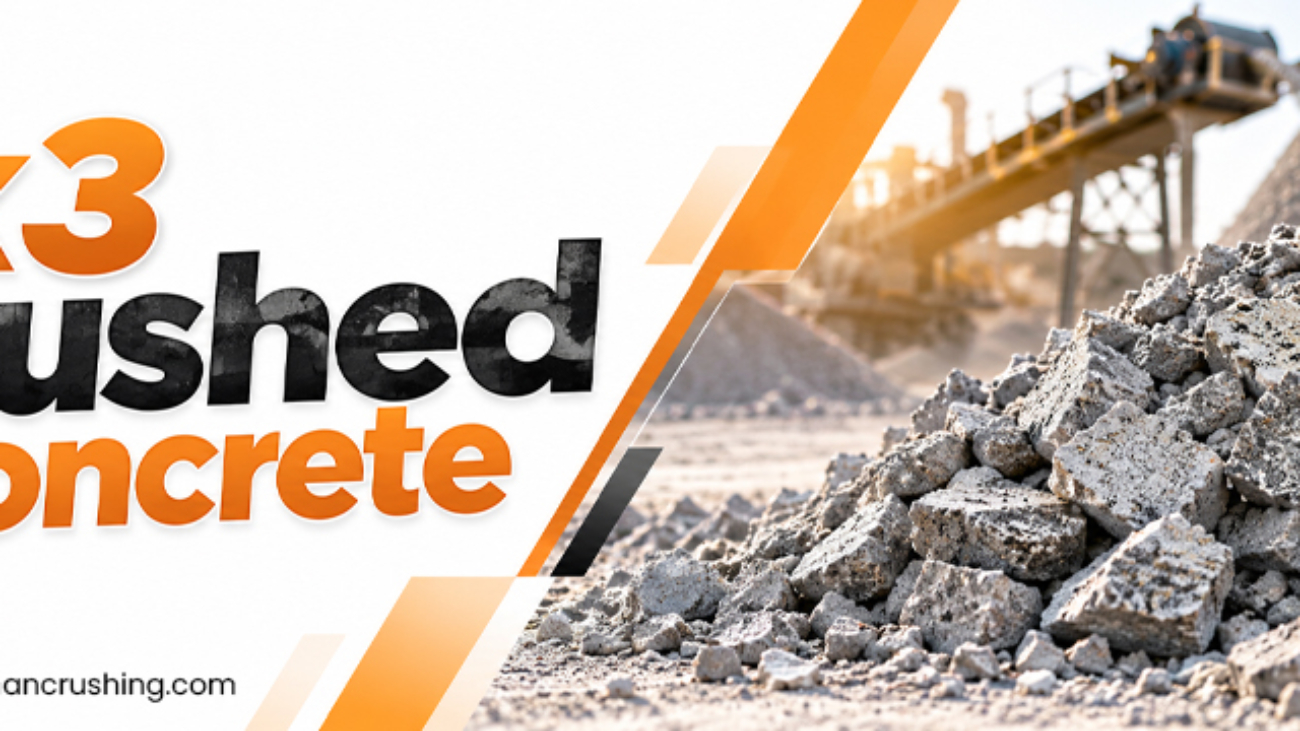
Construction projects need materials that balance performance, availability, and cost. Recycled concrete can help meet those demands while giving old concrete a productive second use. 1×3 crushed concrete is a recycled aggregate that can serve several construction and site-development needs.
Its value goes beyond the material itself. Contractors should consider grading, subgrade conditions, drainage, truck access, delivery distance, and the intended application before ordering. A well-planned material choice can support efficient construction while reducing unnecessary waste.

What Is 1×3 Crushed Concrete?
1×3 crushed concrete is recycled concrete processed into a specified aggregate size for suitable construction applications. Concrete from construction or demolition activities is processed through crushing and screening equipment to produce usable aggregate.
The “1×3” designation identifies the material’s size classification. Exact grading can vary by producer and processing method, so contractors should verify specifications before purchasing.
Unlike unused concrete waste, processed aggregate can return to the construction cycle. Depending on project requirements, it can be considered for base work, drainage, access areas, landscaping, and other appropriate applications.
Key Benefits of 1×3 Crushed Concrete
1. Helps control material costs
Recycled aggregate can provide a cost-conscious alternative to some virgin aggregates. Actual savings depend on local material prices, availability, project specifications, and transportation distance.
The important point is to calculate the delivered project cost, rather than looking only at the price per ton.
2. Supports material reuse
Concrete that would otherwise require disposal can be processed for another use. Thus, 1×3 crushed concrete helps reduce construction waste and makes better use of recovered materials.
For projects with substantial concrete debris, recycling may also simplify material management.
3. Offers multiple application options
A suitable recycled aggregate can be useful across different phases of site work. Its applications may include road bases, driveway preparation, parking areas, drainage layers, and selected landscaping projects.
However, the material should always be matched to the project’s technical requirements.
4. Can reduce unnecessary hauling
On-site crushing can change the logistics of a demolition or construction project. Instead of transporting all broken concrete away and importing replacement aggregate, contractors may be able to process usable material closer to where it is needed.
This can reduce truck movements, fuel consumption, and handling requirements when site conditions make on-site recycling practical.
Where Is This Recycled Aggregate Used?
Road and driveway bases
A properly graded recycled concrete aggregate can form part of a stable base beneath roads, driveways, and parking areas.
The underlying soil matters just as much. Before placement, contractors should check subgrade strength, moisture, slope, and drainage. Poor preparation can undermine even a suitable aggregate.
Drainage applications
Larger aggregate can create voids that allow water to move through a prepared layer. This makes appropriately graded material useful in certain drainage and water-management applications.
Drainage design still needs to account for soil type, elevation, water volume, outlet locations, and any required drainage pipe.
Landscaping and access paths
Recycled concrete can also be considered for selected landscaping projects, service paths, access areas, and other outdoor applications.
For decorative work, appearance becomes important. Buyers should check particle size, texture, cleanliness, and overall appearance before using recycled aggregate where it will remain visible.
Erosion-control projects
Stable aggregate can be incorporated into some erosion-control solutions. The correct design depends on slope, runoff volume, soil conditions, and the severity of erosion.
For larger or engineered applications, follow the project’s specifications rather than selecting material based solely on size.
How Can It Help Reduce Construction Costs?
Material cost is only one part of a construction budget. Transportation, disposal, labor, equipment, and site handling can have a significant effect on the final figure.
Recycling can create savings when recovered concrete is processed efficiently and reused for an appropriate application. Contractors should compare the complete cost of recycling and reuse with the cost of disposal and purchasing new aggregate.
Recycling trucking services can further simplify this process by coordinating the movement of construction debris, recycled aggregate, asphalt, and other materials.
For example, a project may need broken concrete removed from one area while recycled material is delivered to another. Coordinated hauling can reduce unnecessary trips and help keep material moving according to the construction schedule.
What Should Contractors Check Before Ordering?
Verify grading and specifications
Start with the project requirements. Ask the 1×3 crushed concrete provider about particle size, grading, cleanliness, and intended use.
If an engineer, municipality, or project specification requires a particular aggregate classification, verify compliance before placing the order.
Estimate the required quantity
Measure the project’s length, width, and planned depth. Then account for the material’s expected placement and compaction requirements.
An accurate quantity estimate helps prevent both material shortages and unnecessary excess.
Inspect site access
Truck access can affect delivery efficiency. Check entrance widths, turning areas, overhead obstructions, unloading space, and ground conditions.
Also consider where the material will be placed after delivery. A convenient unloading point can save considerable site-handling time.
Plan delivery around the work schedule
Aggregate that arrives too early can consume valuable site space. A late delivery can leave equipment and workers waiting.
Consequently, delivery timing should be coordinated with grading, compaction, paving, and other site activities.
Why On-Site Concrete Recycling Matters
Mobile 1×3 crushed concrete brings processing equipment directly to suitable construction sites. This approach can be useful when a project has a significant quantity of concrete that can potentially be recovered.
The workflow is straightforward:
- Concrete waste is identified and prepared.
- Suitable material is processed through crushing equipment.
- The crushed material is screened or handled according to the required specifications.
- Recycled aggregate is placed in an approved application or transported for later use.
This approach can reduce the distance that heavy concrete debris travels. It may also lower the need for importing replacement aggregate, depending on the project.
Recycling and Trucking: A More Efficient Workflow
Material recovery works best when transportation is considered from the beginning. Construction sites often have several material movements happening at once, including debris removal, aggregate delivery, and equipment movement.
Professional recycling trucking services can help coordinate those movements. This is particularly useful for larger projects where poor scheduling can create congestion, idle time, or unnecessary truck trips.
The best logistics plan considers material type, load quantity, pickup location, delivery point, truck access, and project timing together.
How Does It Compare With Virgin Aggregate?
There is no single aggregate that fits every construction project. Virgin stone, gravel, recycled concrete, and other materials can have different properties, costs, and suitable applications.
The right choice depends on the job’s specifications and site conditions. Recycled concrete may be particularly useful when material reuse, waste reduction, local availability, and project economics are important considerations.
However, contractors should never assume that recycled aggregate is automatically suitable for every structural or engineered application. Always confirm the required specifications first.
Practical Buying Checklist
Before ordering, ask:
- What will the aggregate be used for?
- What size and grading does the project require?
- Does the material meet applicable project specifications?
- How much material is needed?
- Is the subgrade properly prepared?
- Will drainage affect the installation?
- Can existing concrete be recycled?
- Where will trucks load and unload?
- What delivery schedule fits the project?
- Are pickup, hauling, or recycling services required?
These questions make the purchasing decision more precise and can prevent avoidable delays.
Trusted Recycled Concrete Solutions for Michigan Projects
For dependable recycled aggregate solutions, Caveman Crushing & Recycling combines practical expertise with flexible construction support. Its mobile, on-site crushing services process concrete, asphalt, dirt, topsoil, and other materials to project specifications. Contractors can also access convenient dumping, pickup, transportation, and equipment rental options, including sweeping units and water trucks. Whether you need 1×3 crushed concrete for a base project or efficient material handling, Caveman Crushing & Recycling delivers quality-focused solutions designed to keep Michigan projects moving efficiently and responsibly.

Conclusion
Recycled 1×3 crushed concrete can be a practical resource rather than a disposal problem. The right material can support base construction, drainage, access, landscaping, and other suitable applications while contributing to more efficient material management.
For projects involving significant quantities of concrete or aggregate, recycling trucking services can connect material recovery with dependable transportation. Careful planning remains essential: verify specifications, prepare the site, calculate quantities, and coordinate deliveries with the construction schedule.
For help evaluating recycled aggregate, crushing, pickup, and hauling options for your next Michigan construction project, contact Caveman Crushing & Recycling to discuss your material and transportation needs.
Frequently Asked Questions
Is 1×3 crushed concrete good for driveways?
It can be suitable for certain driveway base or access applications when its grading and characteristics match the project’s requirements. Proper subgrade preparation, drainage, placement, and compaction are essential for long-term performance.
Is recycled concrete cheaper than new aggregate?
It can be, but the actual cost depends on local aggregate prices, processing, availability, transportation, and project requirements. Compare the complete delivered and installed cost rather than the material price alone.
Can concrete be crushed on-site?
Yes. Mobile crushing equipment can process suitable concrete at some construction sites. Site access, material quantity, contamination, equipment requirements, and project specifications should be evaluated beforehand.
What materials can be recycled with concrete?
Construction recycling operations may handle materials such as concrete, asphalt, brick, dirt, and other suitable construction debris. Accepted materials vary by facility, so confirm requirements before delivery.
How does trucking affect recycled aggregate costs?
Transportation can significantly influence the final project cost. Shorter hauling distances and coordinated pickup and delivery can reduce unnecessary truck movements, fuel use, and scheduling delays.